In the summer of 2017, the horse bug bit again and it was about time to be with them once more. Over the past twenty five years, there had been a chance or two to be with horses but it didn’t stick. The push came out of a series of vivid dreams about starving, confined horses living under my childhood home. The dire circumstances are uncovered. The dream vanishes as I feed, water and let them out into the sunshine.
The dreams came on and on. They were so insistent I looked into starting an equine rescue. A flood of energy, almost a will, took over with these thoughts. Cash, it takes mountains of cash to support horses in Massachusetts. At the time, I didn’t even have a backyard to stable one. Well, there has to be two, horses don’t care to live alone.
Maybe for a while, I volunteered at a rescue nearby. The problem was too many hands and no horse time. I gave it a go for a few months. A lesson or two came and went. The skill was there! The cost was too high. I had to set the will aside.
A chance came again to be around horses three years ago. This time, I found the gumption to get back on and ride. All the swimming, yoga and gardening over the years didn’t mean diddly. My body was pretty sore after a few rides. How did I get so crooked! My hip, shoulder, the whole left side is up, rides higher than the right. It’s so weird! I could ride with my stirrup leather one hole higher to get things equal.
The cost is still too high. But, I go. The one unfulfilled goal from forty years ago will not go away. It’s a separate force of energy and not me. I want my own horse.
Emma. This year, I have the great pleasure to be with Emma. She’s not young. Life’s been a little demanding on her. She’s become indifferent to the two legged s. Becky says she’s hard to ride. She is sensitive and prefers her own company. Emma wants to be in a quiet place. It’ll be Friday and Sunday afternoons we’ll have our rides. She’s for sale! Too much ☹ We could negotiate, but it’s the monthly bill that’s too much. One of us would end up eating rice and beans forever. As strong as the will is, it’s not delusional.
Years ago, before I fell in love with horses again, I had fun in finding out my patronus from J.K. Rowling’s webpage. It was a magical moment to see a Black Mare cantering out of the misty night forest. I haven’t lost this bit of news. Is it Emma?
“Black Mare – This animal is typical for people who show strong motivation in life and usually represents passion, determination, and an appetite for freedom. Black is a relatively uncommon coat color, so this could represent a part of your personality that you’d rather keep hidden or just reveal to your personal circle. This specific color could also refer to instinctual urges of your mind for the unknown and mysterious.” Source Mugglenet.com
Well, I have an independent nature and keep my thoughts private. I might share something personal from time to time but that’s not common. My true nature is hidden. I talk to the horses. Their energy is calming.
“Patronus Analysis 034 Black Mare. If this is your patronus then you express yourself freely and have a true and honest Soul. You do not hide the truth and express your emotions well. Those with the Black Mare are gentle and kind of heart. This patronus is common in all houses but least common in Slytherin.” Source Patronus Meaning on Tumblr.
You do not hide the truth and express your emotions well! Yes, the INTJ in me tends to fall on the reality side. We’re not good at games and prefer authentic relationships. They are actually quite rare. Horses play games. They can be quite funny together. Happy, herding creatures in search of sweet grass.
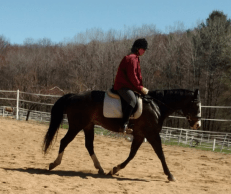
Sunday was a good ride. When we went to the outside ring, she snorted and huffed at the white picnic table that had moved since Friday. Check it out dear, it’s a silly table. We sauntered into the ring. I slipped a bit getting on. Fifty-eight year old legs don’t swing on so easy now. She called out to the other horses. Emma didn’t like being the only horses outside on this murky, cloudy almost rainy afternoon. Becky said she gets marish around other horses. So she’s lonely now! Horses neighed back. It’s okay.
She did tune in after a while. She loosened up and had a lovely swing in her walk. The ground poles gave her trot a lift. She didn’t surge on so much. We’re getting the signals together. This being our sixth ride only, still sorting out how to say in contact with Emma. Some bit champing. Some bending. Smooth halts, transitions still out of sync.
Emma is an Oldenburg from Iron Springs Farm. A fancy sport horse trained up to 4th level dressage. She’s got the moves but has become hard in the mouth. No contact, no connection. This horse is fine. Becky said the surges I feel are impulsion. I have the privilege of riding a horse that has her own impulsion. She has a lot to teach me.
Fridays and Sundays light up with the glory of Emma 🙂 The dream rides on.
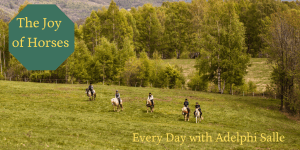
The time is right. As a teen, riding horses was a part of life. Everything about horses is wonderful. The promise to return to the saddle is itching inside. Spring is here.. Let’s ride!
Where to start? What do I need? Where will I go?
Let’s go! Start by breaking down the activity into manageable goals.
I am an adult amateur dressage rider at the intermediate level. I returned to riding after a gap of about 25 years. At 28, I stepped away from a life with horses. A few false starts but at 55, I gave it another go. The horse bug bit once again. The suggestions that follow are from this perspective.
Physically Demanding Sport
Riding horses is a recreational sport.. Whether you rode as a youngster or have never sat on a horse, it’s important to consider your current physical condition. A recommendation is to consult your doctor before starting a riding routine. Getting yourself fit to ride is part of the journey.
Stretch – A range of motion routine that includes stretching, especially targeting the waist, hips, calf and inner thigh is recommended. Yoga is an excellent choice. Routine practice enhances flexibility. Good riders relax in the saddle. No matter what the horse is doing, the rider stays cool, and steady.
Stamina – Walking, swimming, hiking or light jogging are excellent for building strength. A routine exercise program will build endurance. Hopefully, you already have a regular exercise routine as part of an active lifestyle. Aerobics and biking are super ways to keep fit and build stamina. Exercise at a quicker pace helps riders lungs know how to breathe despite the exertion. Sometimes riders tense and hold the breath, or breathe shallow. Not good for horses or riders.
Tension/Breathing/Balance – Yoga, tai chi and qi gong will teach you how to breathe deeply during movements.. Many a rider experiences tension when on a horse and may also forget to breathe properly. I like tai chi or a martial arts training as students learn how to lower the center of gravity. Balance, coordination and focus are part of the skill.
Watch What I Mean – Amelia Newcomb Dressage, “Tension Releasers for Riders”
Amelia speaks clearly and demonstrates skillfully the importance of relaxing while riding.. The horse is moving freely, gracefully and happily in all gaits.. The back and tail are swinging. The trot has a beautiful cadence and forward spring in each step. The horse is in a frame and elastic in the movements. This is what good riding looks like!
Summary on fitness
The experience of riding will be much smoother if the rider is fit. Riding requires flexible joints, strong, straight back, supple legs and good posture. A rider sits lightly on the horse and follows the movements. An effective rider lowers their center of gravity toward the back of the horse. Stirrups provide balance and help the legs stay in the correct position. Ankles need to give with the movement. Tension is common in all riders.
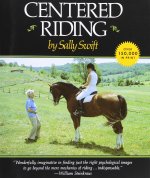
A good book to read is “Centered Riding” by Sally Swift. It’s a classic text with illustrations on how to sit and ride in balance. The imagery is helpful. Good riders have a way of melting around the horse. They don’t just sit up there, they drape their legs and relax deeply with the horse. They join their energy to the horse and become a team.
Acquire the basic gear for a safe ride
Footwear – The minimal investment is paddock boots. Ariat is a top brand but may be pricey. Check the local riding apparel shop, commonly called a Tack Shop, for mark downs or close outs. The boots must fit you and be of good quality. A pair of light wool hiking socks is best to cover the foot. An under layer of silk socks will help insulate the foot during colder weather. Tall riding boots are acquired when and if you decide to participate in horse shows. They are expensive but if well cared for, last many years.
Helmet – A helmet is necessary for riding. Falls happen and a reputable instructor will not teach a lesson without the rider wearing a helmet. It needs to fit without tightness or looseness. The chin strap keeps the helmet secure on the head.
Gloves – A pair of garden gloves is fine to start with. They are inexpensive and can be washed. Not wearing gloves runs the risk of blistering skin. Leather reins move back and forth between the fingers causing a rub in an unusual place. Best to prevent a painful abrasion.
Breeches – Jeans are okay but they will move over the skin and may cause chaffing. Riding breeches are designed to provide protection to the inner leg. The fabric helps the rider be comfortable in the saddle. Winter riding weight breeches are available and much more comfortable to wear in cold weather. Bulk is no fun, but it’s no fun being cold.
Half-chaps – These are leather or suede zippered chaps designed to protect the lower leg. Full chaps are worn by western riders and cover the leg from ankle to hip. Half chaps are much less expensive than tall riding boots. They are easy to care for and durable.
Layers – The weather will determine how many layers are needed to keep the upper body warm. A long sleeved cotton shirt may be the base layer, a light flannel shirt and vest may be enough for a cool day to feel warm. The clothing needs to fit well and be loose. Horses give off a lot of warmth during a ride, so removable layers are best to wear.
Riding Horses
Riding Lessons – Unless you have a friend willing to let you on their horse, you’ll have to find a riding stable which offers lessons. Start with a ½ hour lesson at $35 to $50 per hour. A riding barn with an indoor arena will typically charge more for a lesson. If you are brand new to riding, seek an instructor to help you through the initial beginner phase.
Horse Handling Skills – As part of the ride, a barn worker or the instructor will demonstrate how to handle a horse in the barn or in the paddock. It’s important to follow instructions carefully, especially to close a gate after going through it. A rider is expected to groom and saddle the lesson horse before and after the ride. The instructor will show you what to do. It’s important to learn how to move safely around them.
Stables – It’s important to notice how the horses are cared for at the barn. Do they seem relaxed? Are they given turn out daily? Are the paddocks muddy all the time? Is the barn clean and swept? Is the tack supple and clean? Is the manure removed from the site or at least moved away from the barn? Are the stalls clean? The place needs to be clean and safe. You’re paying quite a lot of money to ride a horse, it’s got to be an inviting and welcoming experience.
Instructors – Be careful about with who you invest your time and money. After a while, it will be evident if the instructor sees you as a customer or only sees your wallet. Stay away from instructors who get quite excited, loud or demanding. Some of them may be good trainers or riders, but teaching riding takes a different skill. If you feel pushed or the tone of voice is brisk, or tsky, consider it may not be the best place for you. I left a barn because of an instructor. I loved the horse I rode, but she took all the fun out of the experience with a bossy, bored tone of voice. She didn’t listen to me when I expressed fear. It’s okay if the riders pushes through their fears of being in the saddle. It’s not okay if the instructor doesn’t react and provide support. If you leave a ride feeling hassled or unsafe, consider it may not be a good fit for you.
I’ll talk more about finding an instructor in an upcoming article.
Time for riding – Riding horses is time consuming. A half-hour ride involves catching, grooming, saddling, riding, cool down, unsaddling, brush and return to the paddock or stall. All together, it can be an hour or more.
Expect to be Sore
Body Care Before – If possible, take a walk or take some exercise the day of the ride. Best not to eat just before riding. Water is fine, but save a snack for the ride home. If I feel stiff or uneasy before the ride, I have put two drops of Sandalwood Essential Oil on my clothing. It’s aroma will naturally calm jitters for you and your horse. Sometimes the best ride is when the body is a little tired. The less you try to ride and maintain a correct position, the more natural the ride will be. Try to leave problems at the door. Horses sense tension, anger and negative emotions very quickly. They will react or resist when strong emotions are displayed.
Body Care After – Unless you are unusually fit and limber, riding a horse will create some physical soreness. Your body is moving in an unusual way on a moving animal. The inner thigh is being stretched around their trunk. The calves need to relax and allow the heel to drop. The back needs to remain upright but be flexible to the horses’ motion. It’s a lot to coordinate. Also, being nervous is very natural at the start. If possible, some stretching postures before and after the ride can diminish the discomfort.
At the end of the ride, drink a large glass of fresh water to re hydrate. It’s important to keep moving after the ride. Walking or some type of activity will help the body recover.
Saddle time!
Practice Ride – If after a month or two of weekly lessons you feel good and the instructor agrees, ask if they permit a practice ride. A ride on your own. Sometimes being under the constant eye of an instructor can be inhibiting. Being on your own riding the horse can provide a confidence boost. Consider all that will happen. Often, you’ll have to bring the horse in from pasture. Grooming can take some time depending on the amount of mud and dust on the horse. Saddling, bridling, getting on the horse by yourself is part of the fun of riding. If you feel comfortable and it’s safe, the practice ride can include a short free walk around the property. Being in an arena is fine, but walking out along a trail or around the farm is refreshing. Done at the walk, horse and rider should return to the barn relaxed. It’s also a chance to just be with a horse and that’s what it’s all about!
Lease – If the budget and time allows, consider a partial lease on a horse. Some stables have this opportunity available. A lesson is typically expected, but two of the rides are on your own. It can be complex fitting in ride time if you work a normal full-time job. Riding arenas can limit free ride times due to a lesson schedule. Talk to the instructor and try to work out what’s best and possible. Nothing is more relaxing than riding a horse Friday afternoons after a hectic work week. Many times, these have been my best rides. It’s just you and the horse.
I hope you enjoyed reading this article. If you have any comments about returning to riding or tips for readers, please share your thoughts.
 In the summer of 2017, the horse bug bit again and it was about time to be with them once more. Over the past twenty five years, there had been a chance or two to be with horses but it didn’t stick. The push came out of a series of vivid dreams about starving, confined horses living under my childhood home. The dire circumstances are uncovered. The dream vanishes as I feed, water and let them out into the sunshine.
 She did tune in after a while. She loosened up and had a lovely swing in her walk. The ground poles gave her trot a lift. She didn’t surge on so much. We’re getting the signals together. This being our sixth ride only, still sorting out how to say in contact with Emma. Some bit champing. Some bending. Smooth halts, transitions still out of sync.
 The time is right. As a teen, riding horses was a part of life. Everything about horses is wonderful. The promise to return to the saddle is itching inside. Spring is here.. Let’s ride!
 A good book to read is “Centered Riding” by Sally Swift. It’s a classic text with illustrations on how to sit and ride in balance. The imagery is helpful. Good riders have a way of melting around the horse. They don’t just sit up there, they drape their legs and relax deeply with the horse. They join their energy to the horse and become a team.
 Riding Horses
 Saddle time!
 LuceStellare