This article describes the benefits of gardening with herbs that can provide year-long nourishment for everyday life. Aromatic culinary and medicinal herbs harvested from the yard can fill the pantry adding flavor and wellness to every meal and malady during the long winter months.
Sooner or later, a bout of the sniffles will be the cause of physical discomfort. Sniffles are a trifling symptom with the potential to escalate into something more onerous. On Friday morning, I woke up with an uncomfortable sensation of a sore throat. My go to alternative treatment is typically a homeopathic product called Oscillococcinum, unfortunately, I had no more doses. So, the first treatment for the day was a large glass of warm water blended with two teaspoons of honey, ginger and lemon juice. The honey infused ginger was made in late fall after harvesting home grown ginger from the garden. Next, I prepared a high Vitamin C tea including home grown rose hips, rose petals and red clover blossoms blended with store bought hibiscus tea. The hot beverage was tasty and refreshing.
On the menu for the afternoon was a bowl of chicken soup. This batch included ginger stalks and leaves preserved from the harvested roots. Herbalists and gardeners are by nature frugal and ginger is a generous plant. It just needs a long growing season, full sun and moist soil. The soup was cooked with home grown lovage, oregano and local garlic.
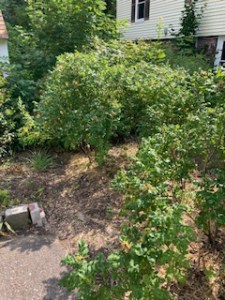
My herbal pantry includes two 32 ounce jars of dried elder flower and leaf. A large shrub was discovered on the western border of my property growing in a tangle of raspberry, multi-flora rose, forsythia and bittersweet. It took years and years of pruning out the unwanted growth to allow the elder shrub to flourish. So, it was a lovely time in July and August harvesting the white flowers and stems. Some of the blossoms were as large as my hand. Another shrub has planted itself on the eastern side of my property. The ideal growing conditions seem to be half shade and humus rich moist soils.
To treat my sniffles, I brewed an infusion of two teaspoons of dried elder flower. The taste is similar to linden flower. The aroma is highly floral and a bit fruity. I drank a second cup before bedtime and repeated the treatment the next day. The weather was mild enough for an afternoon walk around the block. I enjoyed the movement and fresh air.
Saturday night, I woke with a strong cough and mild sweat. The cough was insistent but was calmed by a dose of honey and ginger. I also took a dose of the homeopathic remedy Chamomila. The combination was soothing and calming for my respiratory system. I was able to fall back to sleep without difficulty and slept through until sunrise.
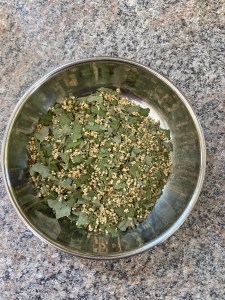
By Sunday, I was well on my way to recovery. The sore throat was gone. I believe the elder flower tea induced a mild healing reaction. The body was getting out the germs with the herbs therapeutic actions including antiviral, decongestant and a fever reducer. The disturbance was brief and effective.
My materia medica notes on elder flower describe it as an herb to take in the acute stages of cold or influenza to reduce inflammation and induce perspiration. The herb is best taken as a formula with yarrow and mint.
Herbs and alternatives to over the counter medicines can provide a pathway to wellness. The ability to reach into the herbal pantry and provide self care is the entire reason I took the herbal studies program.
 Rosewater is a specialty product. The Shaker’s routinely used rosewater in skincare and cooking. It’s actually easy to make when the petals are in bloom. The fragrant waters have the lightest, loveliest look and taste. Gardeners can make a long term plan to harvest their own petals with some planning. All rose petals can be used to make rosewater. But, certain rose varieties make a better quality brew.
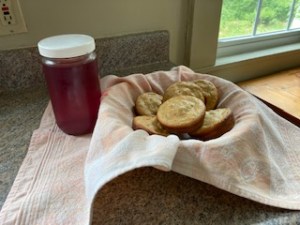 The rosewater I made in June is almost gone now. This photo shows the light lavender flower and rose petal tea muffins made using the homemade rosewater. I am hopeful the weather pattern will shift and rains will bless the soil soon!
 LuceStellare