
The theme for this year in the garden is inviting pollinators to find an all season, comfortable home. The yard has been pesticide and chemical free since 2010. Over the years, some native perennials have taken hold and spread throughout the landscape. The first being purple wood violets. White wood violets with purple centers have also begun to prosper in the soil. Marsh marigold is growing well everywhere. The soil here is naturally sandy and well drained. Leaf litter has been allowed to accumulate in some places creating damp, fertile areas which certain plants enjoy. Jewel weed comes on later in summer and has spread everywhere. However, the lesson from last summer’s drought is that it is not tolerant to dry conditions.
A small woodland in the neighboring yard provides a habitat for birds and insects. The trees include rock maple, oak, grey birch and chokecherry. Routinely, I check for bittersweet cutting them out whenever the vine attempts to take over a tree. Equally concerning is how much the grape vine has grown up into some trees. They seem less bothersome to me but still, they can take over. I guess the treatment is the same, find the source and cut them off at the base. Eventually, the vines dry and break off.
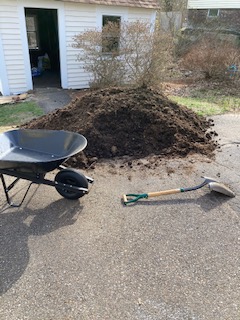
The soil has become quite fertile and the slightest dig brings up healthy fat earthworms. An application of corn gluten at 9% nitrogen is worked into the soil each spring and fall. Pasture feed is applied during the grass growing season as well. In the fall, I had been mulching all the leaves into the lawn but the trend in gardening is to let the leaves stay in a natural state. The winds did clear a lot out but still, piles of leaves had to be moved to the woodland.
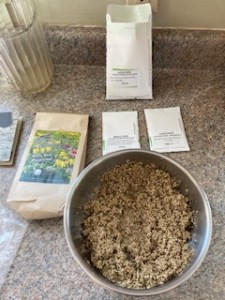
In the fall, several spots were prepared to overwinter and provide quality soil for seeding in spring. The east side yard received a scattering of Better Bee Native Flower Bee Mix last weekend. The seeds had been refrigerated for a month as demonstrated in an earlier blog post. Moisture has been adequate of late with a roller coaster of weather systems providing, cool, cold or warm air shifting daily if not hourly at times. A dusting of chopped straw covers the seeds. How to keep my cat from using the bed as a litter box has yet to be discovered.
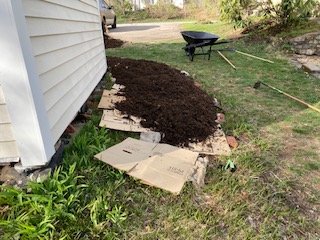
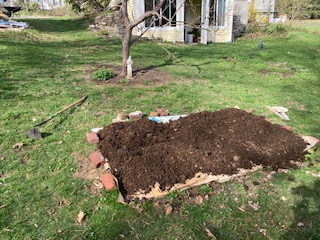
A truck load of well-aged horse manure was delivered recently providing natural nutrient rich compost to garden beds. Here is a photo series of how the compost is distributed throughout the selected pollinator beds. Soon, seedlings and seeds will be set out to grow.
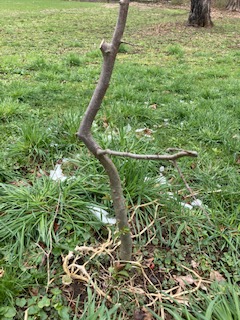
All is well in the garden. Every day, it provides a refuge and a place where troubles do not follow. The garden goddess did speak in her way. This little, forlorn looking mess of an apple sapling was found growing last year in an odd place. The area has many orchards nearby so a bird probably deposited the seed. When it was moved to a sunny, breezy location, it promptly shriveled up and showed every sign of rejection. The dry spell last summer did not help. So, this year I had some idea to replace it with another peach tree. But, look what has happened! At the base of the tree are sprouts! The roots did regenerate as was wished. Maybe I’ll keep it where it is for this season and see how much growth may occur. As there are several myths of death and resurrection, perhaps I’ll give it an appropriate name. Since it comes from the earth, Persephone may be the best choice.
#pollinator
April 23, 2021
Here’s a photo of the sprouted apple tree.
 The forsythia patch is now roots and stumps. Once they are removed, posts will mark out where the plants will be dug in. An order went into to
 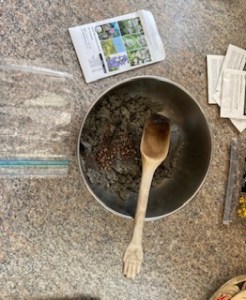 Some flower seeds that require a cold stretch hadn’t been prepared in any way until I viewed an online garden lecture with
 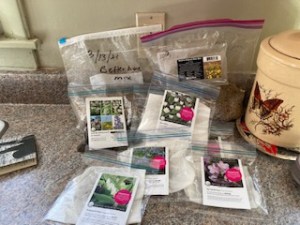 The seeds need the dark, cold and moisture to start to germinate. They’ll stay in the fridge until the last weekend in April. At that time, I’ll transfer them to a different container and hope they do germinate. The larger mixes are meant to be distributed over the prepared sites outside. I just need the weather to change to consistent warmth at 50º F with sun and rainfall to moisten the soil.
 LuceStellare