Naro may not be the most well-known stop on the tourist trail through Sicily. The ancient city is settled on the crest of a hill in the province of Agrigento overlooking La Valle del Paradiso, Paradise Valley about an hour’s drive from the coast. Many Sicilian cities are situated in this manner partly because of the topography. This is also a defensive position allowing the guards to sound an alarm should invaders be on the march. Sicily has a right to be wary of foreigners. All the powers of the Mediterranean and even the Minoans have put their boot on Sicily. Why? The island is a paradise. The land is fertile. The hillsides throughout Sicily are cultivated with grape vines, olive, citrus and fruit trees, grain and vegetables. The crops are planted in neat rows encased by tidy stone walls or shrubs defining each plot of land. Wild flowers of poppy and broom are abundant and cling to the edges of the fields. The climate offers two excellent growing seasons. The wind is constant allowing for pollination and air circulation around crops. The rains are plentiful in their season and the sun is strong.
Naro was not directly affected by the earthquake in 1693 that shattered the southeastern side of the island. The damage was so severe that several cities in the Province of Siracusa actually moved rather than rebuild. The quake knocked over walls in Agrigento and was even felt in Palermo. The rebuilding took place during the late Baroque Period (1600 – 1750) and created a distinctive look to the region. The Baroque Style is ornate and layered, extravagant and vain.
Naro is referred to as La Citta del Barocco, The Baroque City. The town planners embraced the style and added a layer of embellishment on to many public buildings and churches. To visit Naro is to come directly into understanding of the crossroads of cultures that have been in Sicily. Some of the churches have been built over a temple, or a mosque. The Castello di Chiaramonte and Chiesa Caterina d ‘Alessandria are gothic, medieval structures. Both have been altered or added on to several times. The city retains evidence of Greek, Arabic, and Norman occupation.
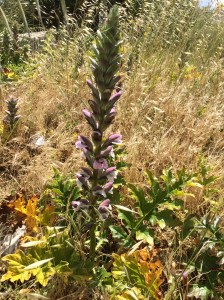 The Province of Agrigento contains well preserved Greek ruins. The Hellenic city of Selinunte is closer to the sea but also an easy drive from Naro. Akragas, the ancient name for Agrigento, was a major city of Magna Graecia and a few miles down the road, the famed Valle dei Templi is a short drive away. A casual way to determine if an area had been inhabited by Greeks is to look to the hillsides for acanthus. This flower grows in abundance at all Greek sites. Sicily has housed and fed external civilizations for ages. But, every town and city that flourishes today began as a humble settlement near a reliable source of water. Il Lago San Giovanni, an artificial lake completed in 1981, is fed by the river Naro. This area is dominated by agriculture and would need a plentiful, predictable supply of water. The translation of Naron in the Greek language is river. Perhaps the origin of the name.
The city may also have been named by the Arabs. The Castello di Chiaramonte is situated on the highest point and was built on top of an Arab stronghold. Some writings indicate this was formerly a Roman watchtower. The translation of the Arab word Nar is flame, luster or glow. It’s possible the town radiates a soft glow like a flame from a distance when directly in the sun or moonlight. The color tone of the stones is light honey to soft butter cream. The architects of this city may have followed the path of the sun when laying out this city. The shape from above is irregular crescent facing toward the coast and not unlike an oyster shell.
On the ninth day of my vacation, I came here. It was a lovely moment to watch Naro appear in the distance. The road wound and swopped like the swallows, gracefully swirling to the top. Up and up the car climbed, arriving at Piazza Municipio, a small square that is home to the Town Hall, Chiesa di San Francesco, a barber shop, bar, shops, and residences. The city was not accustomed to outsiders I thought. The streets were narrow and buildings tight up next to each other. Everything was quite old. Everything was quiet. I had traveled several thousand miles and wondered that one of the inspirations for this journey came from here. An arrangement had been made to meet with a family member. While waiting to be met, bashfulness took over and I wondered why I was here. Is it not odd to be inspired to travel and then go? I came to see Sicily, to take this day and visit Naro. Self-doubt ruled the moment. However, people seemed welcoming and quite curious.
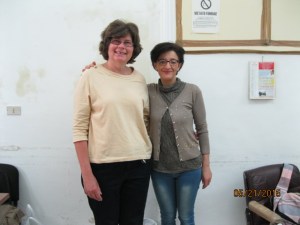 I was fortunate to meet with Signora Eleanora Ognibene. A man named Enzo became a part of the small group I was with and helped with translation as Signora spoke no English and my Italian was basic. She was able to take a few minutes away from her job to say hello to a fan from America. She was slender, willowy, well-dressed, dark eyes with an almond shape that turned down at the corners. When she spoke, she was lively, bright, courteous and engaging. The eyes were Piero’s. I’d had the opportunity to shake hands with him twice during the finale at two concerts. The second time, I was brave enough to look straight at him and absorb a bit of what made him so special. He has vivid, speaking eyes. They flash and while the face may be still, the eyes revealed the many thoughts skittering across the mind. The meeting lasted about 15 minutes, I stumbled along in light conversational Italian She seemed a content woman, secure and graceful in herself.
After this meeting, a man appeared and took me in towards the mayor’s office. I did not wish to intrude. No, I was only shown about the town’s public chambers, an assembly room and the mayor’s conference room with a dazzling painting up on the ceiling. The building had been a convent attached to the Chiesa di San Francesco. This man clearly wants me to see something important to the town and understand that in Sicily, art is everywhere.
I was a bit dazzled coming out of the hall and back into the streets. Enzo brought me into the Feliciana Municipal Library where I met Anna Maria Morello. She showed us a 15th Century fresco on the wall of the Death and Assumption of the Virgin Mary. Apparently, the fresco is typically Byzantine and one of the few examples of this style in all of Sicily. I had been raised a Catholic and commented that I had been taught she never died and sort of floated up to heaven at the Assumption. This was an artistic interpretation of what may have happened. One thing I discovered about Catholic Churches in Sicily, is that it is common to have a relic of a saint or person who may have traveled to the Holy Land during the Crusades or on a pilgrimage. The fragments of their body and clothing are kept on view in a glass case or under an altar. These pilgrims truly believed, lived, and died in their faith. Sicilians have a more sensible grasp of life and death. Of course she died, all humans do. At that moment, I realized I had lived with a myth for years. It was not a mystery, just a misinterpretation of reality.
Somehow it got mentioned I was a writer and the librarian gave me two booklets from the library. One is, “I gioielli discreti di Naro” by Matteo Collura and Gianni Provenzano which in English is “The Subtle Jewels of Naro”. The other is, ”Naro: Kalos – Luoghi di Sicilia” or “Naro: Places of Sicily”. Both are published by the Commune di Naro. I was beyond delighted to receive such gifts. One of the booklets contained a print of Chiesa di San Augustino. If I read the liner notes correctly, this is one of only 250 printed in 1999. The lithograph by Provenzano that came with the booklet bears a stamp of authentication. How generous to give such a precious document!
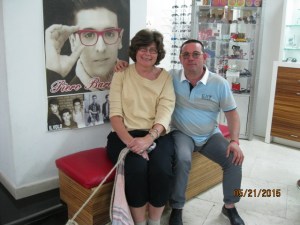 I went on to visit with a contact I had made through social media. Luxottica Minio, Naro’s optical shop was only a few steps down the Corso Vittorio Emanuele. I always thought so highly of this man who managed three shops, was raising a family, had his own life to lead but took the time to support Piero. The families of Barone and Minio seemed to be neighbors and friends. Signor provided all the eyeglasses that Piero wore. Piero wears eyeglasses on stage. I was what made him stand out to me from the start. Most performers are highly conscious of their appearance. There are very few entertainers who would be seen wearing glasses at all. Yet, Piero was rarely seen without them. He’s a handsome young man but appeared most comfortable and not concerned with appearances.
I found Signor Minio’s shop to be modern, spotless, and trendy with the latest Italian eyeglasses for sale. The staff were kind while we waited for Signor to appear. How dynamic was his personality. He spoke no English but welcomed me in his brisk, efficient way. Signor Minio was a busy man, had great energy and moved about like a boss does. We exchanged some gifts and did take that coffee he had mentioned.
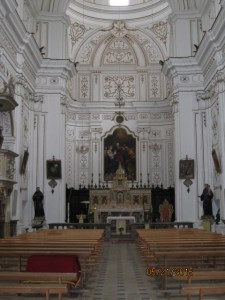 A guide was found with a smartphone app in English that helped during the tour of Chiesa di San Francesco and Chiesa di Caterina d’ Alessandria. The Baroque Chiesa di San Francesco, reconstructed in the late 1600s, was small and felt worn. Oh, it was clean and well-kept, but the floors seemed as if a thousand footsteps had passed over it. The walls were pure white with elaborate scroll work, paintings, and statuary everywhere. I was shown a relic of a pilgrim, bones and all, hidden behind a false door on a side altar. The guide took me behind the main altar at the front of the knave and into a room that smelled strongly of old, warpy wood. On three sides of the wall were heavily carved cabinets elaborately embellished. There was a font where the priests used to wash their hands before giving Communion. He showed me a cupboard that kept the most sacred objects of this church. There was a statue of Jesus, a crown of some sort and a carved object that looked like a sunburst with an eye in the center. The eye I had seen before in other churches in Noto and Modica: The All Seeing Eye.
Chiesa di Caterina d’Alessandria was constructed in the Norman style. The interior was far simpler with classic Norman arches. It had at one time been a mosque. The app recounted that when the Plague arrived in Naro, it reduced the population from 18,000 to 12,000.
We were taken down a staircase into the old crypt. The wealthier members of the community were buried here. There were several stone chairs around the room with a hole in the center. The body of the deceased sat upright in the chair. The gases or liquids of the body were drained out. In order for the body to sit upright, it was pinned to the iron bar sticking out from the top of the chair. I didn’t quite understand what happened next but the bodies were dropped into a hole in the floor. If the body didn’t quite fit, a mallet bashed the head until it did. Ugh!!!
So, my writer’s mind immediately leaps to the rest of us. Where are the rest of the inhabitants buried? I never saw a cemetery in all of Sicily in my travels. I have no idea how the dead are buried. Sicily has been supporting civilizations going back to the days of the Minoans. This is a curiosity. Morbid but a part of the cycle of life and death.
The app talked about how the wealthier patrons were separated within the church by some sort of barriers between their section of the knave and the rest of the attendees. All that was left were cutouts on the columns of the arches to hold the curtains or whatever served as the panel between the groups. The wealthier patrons sat right in the middle, the rest of the crowd sat on the left or right sides. This description would make no sense unless I had been inside several churches in different cities. I noticed this most particularly in Ragusa, that the center pews, although all made of simple unadorned wood, were highly polished and pleasing to the eye. The seating of the same material, on the outer edges of the knave, were definitely more worn and not as well cared for.
Also, common in each church, is a comfortable, cushy, king size, highly embellished chair of the finest quality. The chair is always situated on the right side looking toward the altar. The guide pointed out this chair in the church. He put my attention to the photograph above the chair. There was Pope John Paul II seated in it! The Pope has been to Naro. In May of 1993, on Apostolic Voyage 58, John Paul II visited the Valle dei Templi in Agrigento. This is one of the finest archeological sites in the entire world for Greek art and architecture and is perhaps a half hour drive from Naro.
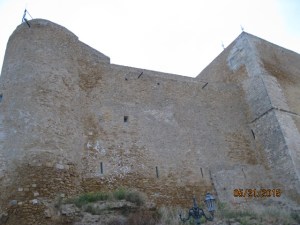 We took a long narrow road up and up to the very top of Naro. Here is the Castello Medievale built around 900 AD. The castle is in superb condition and plastered inside and out in a soft, honey and cream-colored stucco. Calico cats were puttering around the base of the wall as we walked up to the entry. There were very few windows. This castle was a fortress meant to keep someone in or someone out. The door and gate, as all gates in Sicily, were in excellent condition, polished, straight and strong with a well-oiled lock. We walked into the spacious courtyard filled with sandstone and large butterfly palm trees.
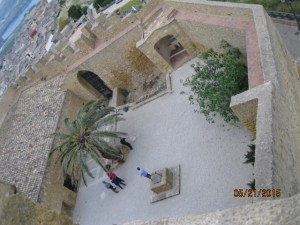 The day was gloomy with a heavy, cloudy sky. Inside the structure, the stones gave off a cold, clammy aura and felt unwelcoming. The hallways were narrow with high ceilings. The rooms on the right formerly housed the horses. It must have been so long ago as it doesn’t look at all like a stable. Everywhere, it was too close. A staircase wound around and up one flight into a display area for gowns and accoutrements from the Baroque Period. The pictorial display showed the last family that lived in the castle.
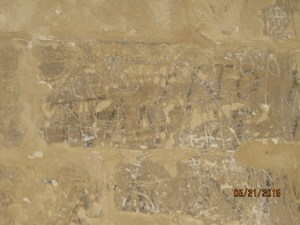 At one time, the castle was a prison. We were taken up into a large chamber with deep slotted windows. The walls were covered with etched graffiti from former inhabitants. What had they used to carve their names into the stone? As with every site visited in Naro, a person would become part of the group that knew quite a bit about the place. He sorted out I was keenly interested and started pointing out the markings. He showed me a carving of a mother and child. We found dates and names from so many years ago. Apparently, the light from the windows had been blocked out and the inhabitants left in the dark to ponder a hopeless situation. How many people have been here? What was their crime? Did they ever get out?
I took a long slow climb up a tall staircase to the ramparts of the castle. Overlooking the city of Naro, was a statue of the Virgin Mary. What a view! We could see far out into Paradise Valley. An old abandoned mosque was pointed out nearby. The fields around the castle were covered with red poppies and blown about by a brisk wind. Of course, all the way down back into the courtyard, a barred door lead into a large open rock chamber. This prison was carved right into the bedrock. The chill grey ugly walls made it worse. The pit provided a place for human waste. The feeling was not one of haunting. Whatever energy was left was dead cold.
Sicilians seemed to be artists by nature. The old cities, churches, squares, and fountains were a reflection of the best qualities of Sicilians. Everything, be it the sea, flowers, birds, clouds and babies, was beautiful, casually, simply beautiful. The beauty of the land was replicated in the cities. As nature adorned simply, man adorned purposefully. The architecture was so old. The decorative facades, window frames, doors, steps, porticos and even the water drains were works of art. Many churches had a large screen carved of wood meant to block the sun’s rays at the entrance. Even the functional furniture was exceptionally designed and made. Cherubs, gremlins, angels, saints, and spirits looked out at us from every corner.
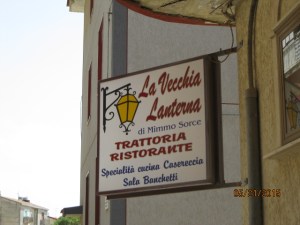 If you do find yourself in Naro, stop at the La Vecchia Lanterna on Via Palmiro Togliatti. They were known for their homemade ravioli. The pasta was hand rolled and filled with a finely diced mixture of tomato, carrot, lean beef, and garlic served with Nero d’Avola wine. The ragu had just a little heat. The beef or veal served were tender, lean and well cooked. Everything was very fresh. Despite the full plate of pasta, meat and salad. I was able to eat it all and not feel stuffed.
The memory of tall staircases, quiet empty streets and sunlight breaking through still lingers. The phrase, “Fulgentissima” was used by the Narese to describe their city and what it meant to be from Naro. One of the guidebooks I returned with states the Norman emperor Frederick II (1194 – 1250) gave Naro the title. Naro has been an important center for commerce, agriculture, and Christianity since medieval times. Naro was compared to a pearl inside the oyster. The shape of the pearl was a mystery until uncovered. It’s “wealth” hidden inside. It takes a native to appreciate the complexity of Naro’s history, art, and architecture. Fulgore in Italian means brightness. The suffix, -issima in Italian creates an adjective that gives the word a meaning to the highest degree it could possibly reach. Fulgentissima means literally brilliantly radiant.
I sought out Signor Salvatore Nocera for help as I researched the words to the song, “Canta Fulgentissima”. I had written earlier about some of my motivations for visiting Sicily and specifically Naro. It was music that brought me here. This song was sung by the lyric tenor, Piero Barone of Naro, on the occasion of his inauguration, as Ambassador of Naro to the World, in December 2014. A title he earned by continuous promotion of this city to the people he entertained on stage. I listened and thought about what he was saying to the fans. I followed his suggestion and stopped for a while in the city of his birth to find out what he was so proud of. The song was especially arranged and played by Signor Nocera on guitar for the performance. Signor Nocera was able to provide the lyrics which are published in this article.
Signor Nocera is a modest and highly accomplished man. He was born in northern Italy but moved to Naro with his family from age 6 to 17. He traveled to Pavia to study medicine and music. He performed for several years in Germany at folk music festivals and in the theater. He completed an MD in 1986 and has a keen interest in poetry and musical composition. He moved back to Naro permanently in 2004.
The song is written by Gero Rindone of Naro (1897-1958). Signor Rindone had a full and complicated life. He was a veteran of WWI. He completed a law degree at the University of Palermo. He was a gifted singer, composer, and poet. He studied music for several years in Milan and performed successfully as a lyric tenor. He made his operatic debut in Torino 1925 at the age of 28. He appeared in: The Barber of Seville, Cavalleria Rusticana, Pagliacci, IL Travatore and La Giocanda. According to Nocera, Rindone was listed as one of the 900 great professionals in Italy. He wrote the words to this song in a letter to a friend. He was honored by the citizens of Naro with a street named after him, Via Gero Rindone, in town.
________________________________________
The Lyrics to Naru Fulgentissima from Signor Nocera in Italian and English
Terra di fiori e cantici Terra di poesia
Sei sempre dilettissima
Chi ti conosce ti ama
Chi ti conosce spasima
E non ti dimentica più
Quando il sole su Mongibello
Apre quel gran ventaglio alla mattina
La conca tutta attorno al Catello
È un Paradiso, una cosa divina
Quando la sera calda di calore
Scende raggiante sopra Punta Bianca
Il sole tra vampe di colore
Metta la pace in un’anima stanca
È naro fulgentissima
La bella patria mia
Si apre il mi cuore e cantano
Tutti i miei sensi
________________________________________
Land of flowers and songs of Earth poetry
You are always beloved
Who you know loves you
Who knows you agonizes
And do not you forget it
When the sun on Mount Etna
Opens on the large range in the morning
The basin around the whole Catello
It is a paradise, a divine thing
When the hot evening heat is
Beaming down over Punta Bianca
The sun blazes among colors and
Puts peace in a soul tired
In Naro brilliantly radiant
My beautiful country
It opens the heart and I sing
All my senses
________________________________________
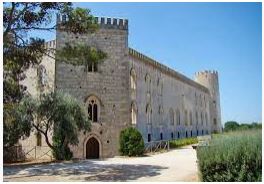 The castle comes with the legend of Bianca di Navarre, the daughter of Charles III of Navarre. She was married to Martino I of Aragon in 1402. It was a political union between two feudal families. Bianca lived at the Castle while managing the affairs of nine cities in eastern Sicily. Martino died in 1409 while in Sardinia. A decision was made to marry her to Bernardo Cabrera, an advisor of the Navarre family. Bianca objected to marrying the much older man and decided to flee into the countryside to escape; hence the name,
 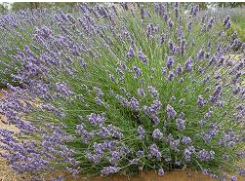 Some of the echoes of that lifetime as Talytga follow into this one now. Stray cats find their way onto my doorstep back home. Wicker baskets are all around my house whether I need them or not. I enjoy working with my hands. I had a large bed of long stemmed lavender in the garden but the harsh winter took them away. A basket weaving workshop offered me an opportunity to create one with my own hands a year or two after this experience. My hands felt clumsy as I wove the lash together. It’s a pleasant thing to do but did not bring forth new memories.
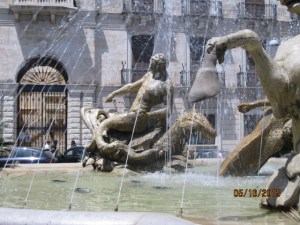
 As impressive as this could be, everything came to a stop when I entered Archimedes Square. In the middle of the piazza is the Fountain of Diana. All that I knew about Greek mythology came back in a joyful moment. She I knew something about. Diana is the Roman name for Artemis, the great goddess of wild animals and the hunt, protector of women in childbirth, guardian of agriculture and animal herding. She is the moon, nature, and women all at once.
  The reader might have sorted it out by now, I tend to do things in a solitary way. I pick up all kinds of energy and do better without the distraction of other folks around. People project their emotions and feelings in different strengths. All too often, I feel their discomfort. I can let my guard down in nature, not with others present. I trust in the unseen of natural surroundings, not the unseen nature of people. Intimacy with nature is natural.
 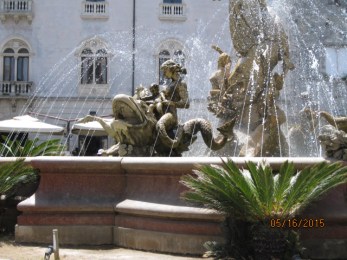 The large circular fountain in Ortygia is an elaborate depiction of a myth that was unknown to me. The central figure was Artemis with her bow, at her foot was Arethusa, behind Artemis was the river god Alpheus and in the water were several figures riding sea creatures. A young boy rode a sea horse thrashing the waters. A mermaid and child rode a wide-mouthed fish. A merman rode a sea turtle moving through the sea. The gentle spray of water surrounded thel figures above.
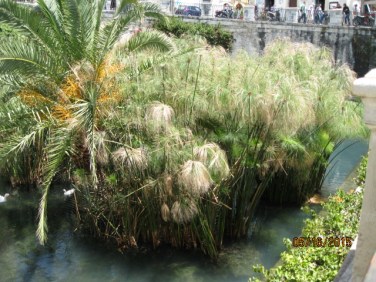 The Fount of Arethusa has a fresh water reservoir near the sea. It’s a deep, large well of water filled with papyrus and reeds. A brood of ducks live there and cats are seen lounging on the walkways. A few steps away is a shaded place with a bathing area called the Fountain of the Slaves. With the beauty of ancient things, comes the reality that not everyone was here of their free will. This is sacred ground.
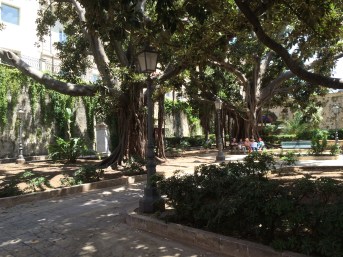 The shade offered a lovely resting place on a sunny afternoon. The planters around the park are filled with bird of paradise in full bloom. Incredibly large blossoms with black beaks and tall white plumes. In my native Massachusetts, the magnolia tree might reach 20 feet high and might live 20 years at best. They were in their glory in this island environment. Sicily is more arid than humid. There always seems to be a breeze and it cools off splendidly at night. Of course, I was visiting in May and found the climate most refreshing. We had rain for one or two days, but it was a nourishing kind. The one thing missing from this landscape are rivers and streams. I rarely saw the type of water common to my native New England. We are abundant with ponds, marshes, lakes, streams, and rivers. Sicily seemed to hide her fresh water sources. The rainy season is typically in fall and winter. I commonly read signs along the highways for
  LuceStellare