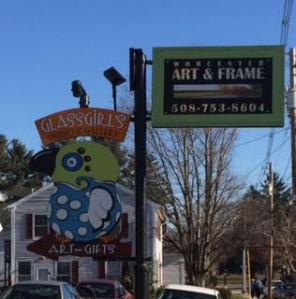
 Glassgirl’s Studio & Gallery in downtown West Brookfield Massachusetts is a unique emporium. In an area noted for antiquing, the shop sells a funky collection of handmade jewelry, art prints, and contemporary gifts more common to touristy towns like Northampton or Nantucket. Proprietor Jennifer Geldard, an international glass bead and jewelry artist, says, “its an uber-cool place to stop.” The challenge is attracting customers in a sleepy little town of 3,000. After two years in her current location, she has established a local and regional following. But, don’t think old retail. The savvy merchant brings the buyer into the store the virtual way. The social media sites, Pinterest and Facebook, help a niche retailer reach regular and new clientele.
Geldard is a self-taught lampworker using a propane torch to melt rods of Murano glass around a metal bar into intricate inlay beads. She started her craft 20 years ago, finding a network of artists and collaborators in on-line forums. Attendance at trade shows widened her connections and artistic skills. Geldard has taught bead classes in Switzerland, Germany, Austria, and England. Her customers can shop for jewelry and art illustrations on the shops professional social media pages. Sales are sometimes made with the iPhone app Facetime allowing clients to see the item advertised a lot closer.
 Geldard prefers to devote her time in studio to her art. “I am an artist, I don’t want to spend my energy trying to advertise my jewelry and art. I make enough money to pay the costs, that’s all I want to do, take care of the rent so I have the freedom to create. I couldn’t survive here on my art and jewelry alone, I had to bring in the other merchandise to pay the bills. I brought in Rebecca recently to share the retail space. My focus is on being a successful artist. The town supports that after two years of building a following.” Many of her best clients are other glass bead makers. The time, effort, and expertise required to produce a quality finished piece is understood best by others in the profession.
 Geldard also wants to do children’s book illustration. She is taking an on-line course from Make Art That Sells with Lilla Rogers. Instructor Gabriella Buckingham says, “it is a unique resource for artists who are passionate about what they do and determined to make a living out of their art while staying true to their style.” The course teaches the artist how to create a professional portfolio and pitch it to an editor. Techniques for selling are learned including how to teach and live feed sketching from in the studio.
Rebecca Fay has taken over a corner of retail space with her Worcester Art & Frame Shop. One more service now offered in town bringing more foot traffic into the store. The shop has some challenges in location being set back on Main Street between Haymakers Grille and Premier Online Services. Geldard has been puzzled how to grow her business as foot traffic is limited to walkers and visitors attending local events.
Links
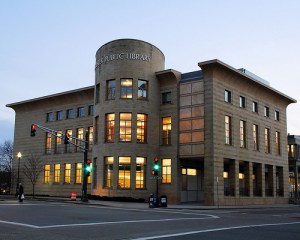 Worcester, in the heart of the commonwealth, is Massachusetts’ second largest city. Worcester Public Library (WPL) at Salem Square in the downtown district provides services for 181,000 residents. Immigrants may take English language and citizenship classes. Entrepreneurs participate in small business workshops. There are book clubs for different generations of readers. History buffs and genealogists have access to maps, databases and records for Worcester County. The motto of the library is: Your Open Door to Opportunity. The privacy rights of all patrons are an integral part of daily service. When WPL automated materials check in and check out, it gained efficiencies and a deeper layer of security for patrons.
 The installation of the automated system did not cause any job loss, Mattei said. In fact, because of the efficiency, Bookmobile city service has expanded. Two libraries on wheels, Libby and Lilly, provide monthly services to retirement homes, community centers and several private and public schools without libraries or librarians on staff. Efficiency in automation also allows the Library to fulfill its goal of maintaining five branches in Worcester. “The WPL is a community center not just for books but technology providing 24 hour service on-line. Technology enhances service, it does not replace it,” said Mattei.
 LuceStellare