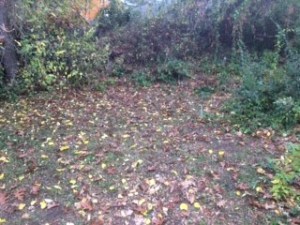
 The pollinator habitat project is going forward in my garden. The gardening space in total is about 1/3 acre of mostly open land with sandy loam soil. An open field borders the south side of the property. The north border is tree-lined. There’s plenty of sunshine and the proximity to the Quaboag River means all kinds of birds and pollinators could pay a visit.
This area is overdue for some attention. Ten years ago, there were two cherry trees that didn’t produce fruit planted here. One of them was a mass of twisted branches. They were planted too close to a Siberian Olive tree which does produce tiny champagne pink berries each fall. The cherry trees eventually came down and the roots were removed. Some fruiting trees are self-pollinating. My guess is those trees were not.
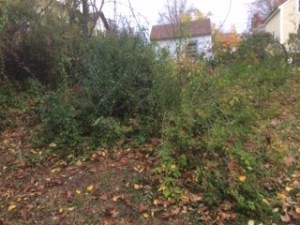 The space is overrun with nonflowering rose and creeping jenny. The slope includes a large planting of forsythia. Last winter, I cleaned out and pruned about 2/3 of the bed and it came back well this spring. However, the forsythia may be colorful and an early bloomer, but adds zero value to pollinators.
The goal is to restore this large area to a pollinator-friendly habitat at a reasonable cost. Over the weekend, I raked out the debris of downed branches and old vegetation.
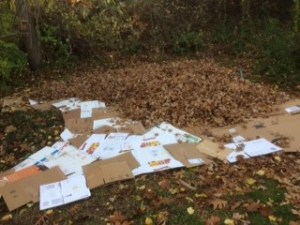
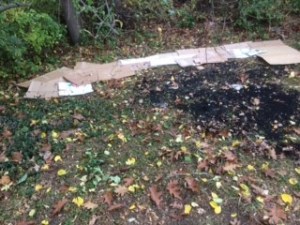 After clearing out and mowing down the living plant material, soot and ash from the nearby fire pit were spread around. The pile was getting large and needed to be disbursed. This will add some nutrients to the soil. Then, I secured as much free cardboard as I could and started building the layer on which the new garden will be planted. I wanted to cover the cardboard with horse manure as I did in the other location. But, this is about 100 square feet and a little too much for me. I’d need someone to dump the load right on the spot for spreading. In the meantime, I started raking leaves into the space. The rains are returning this week, which will soak the area nicely and set up the decomposition.
The short term goal is to start to rehab the space by creating a barrier for the unwanted plantings. The long-term goal is to provide a stable, healthy soil base that is as invasive free as possible. Over the winter, the cardboard will rot into the soil. The leaves will compress but decomposition will take much longer than one winter. It’s mostly a holding place for the fallen leaves to overwinter while I figure out how to add a layer of permeable mulch over the area. It would take probably two or three yards of soil and compost to cover the area.
 What will be planted here? It’s not known yet, there are so many plants and shrubs to consider. The habitat is naturally a moist, shaded space. However, the drought of rain from May through September turned it into a dry shaded space. So, it will be fun reading over what is recommended and consider what to plant. So far, black willow, swamp azalea and Joe Pye weed are at the top of the list.
The next area to tackle will be the forsythia. While I can prune out the branches. How on earth do I remove the stumps?
A day in the life of an amateur gardener rambles on…..
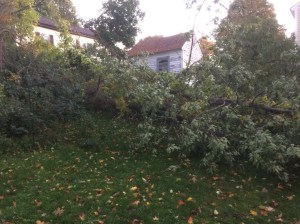 Mid-October in central Massachusetts and the days are fairly mild. A few light frosts have occurred by now, but most important, steady all day or night rains have returned! A bizarre weather front moved through the area on October 8 knocking down a cherry tree in the yard. The storm lasted maybe fifteen minutes with gusts of wind at 50+ mph and almost horizontal large hail. A glance out the window around 5:30 p.m. and I saw the tree on the ground. The peach tree survived with only a few nicks caused by the falling tree. I thought the low bush blueberries were smashed, but, once cleared, are doing just fine. UGH! A day later and a few hundred dollars provided a cleanup of everything except the big root. Looks like the cherry is shallow-rooted and after three months of drought, was vulnerable to the storm.
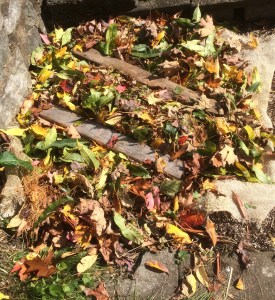 Cohosh (homegrown seeds)
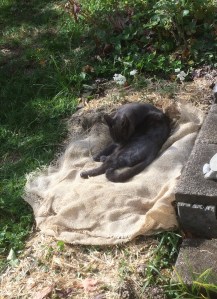 Here is Stella lounging over the spot where I planted some spring crocus and tulip bulbs.
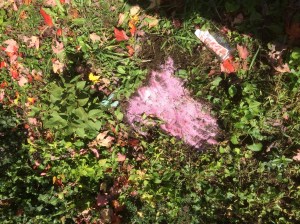 The last seed planting Sunday was butterfly milkweed. They prefer dry soil with full sun so they are given the preferred conditions. The colored sand marks their location.
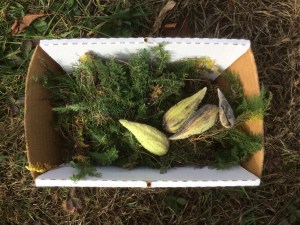 Given such a bounty, it may be best to consult the experts at
  LuceStellare