The daylight hours begin to stretch out now. The air is trying to warm here in central Massachusetts. The weather brings cold, frosty nights with the occasional snow shower. This past Sunday afternoon gave us a wild snow squall for about a half hour, followed by sunshine and blue skies. Perhaps a snowbow appeared?
In the garden, the sorrel and motherwort are greening up. The old peach has grey buds and the blush of sap is moving through the branches. The tree is ten years old and growing well. Woodpeckers and nuthatch stroll up and around the bark looking for insects as they begin to emerge from dormancy.
This year in the garden will be active in planting of native shrubs, trees and perennial flowers. The earlier posts show a progression starting last October with site preparation in two locations. The shed was renovated over the winter so a third area has emerged. Posts on. this project are planned in the weeks ahead.
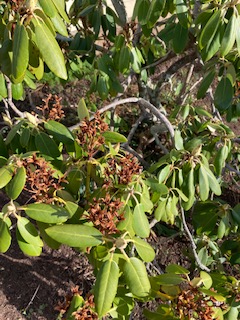
 The forsythia patch is now roots and stumps. Once they are removed, posts will mark out where the plants will be dug in. An order went into to Coldstream Farm for root stock with an arrival date based on the season, probably in May. The soil here is rich from years of leaf decomposition and tends to stay moist. The section faces east and benefits from sun until about two o’clock in the afternoon. The tree line blocks the western side from direct sunlight. Marsh marigold has returned abundantly to this area so I look forward to the further spread of this native plant. Jewel weed tends to be prevalent here as well, although it is not drought tolerant. Our arch nemesis bittersweet continues to experience removal; however, it persists in trying to strangle another tree if I dare let my eyes wander away from it.
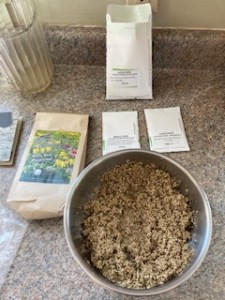
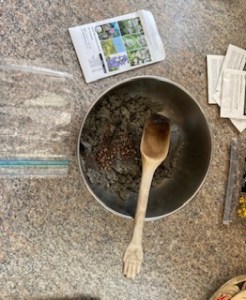 Some flower seeds that require a cold stretch hadn’t been prepared in any way until I viewed an online garden lecture with John Root. He spoke briefly on immersing seeds in wet vermiculite or sand, placing the mix in a plastic bag and storing in the back of the refrigerator for at least one month. So! Sunday, this happened with two larger seed purchases from BetterBee and Prairie Moon Nursery. These photos show the process is quite easy to do. The seed size dictates the type of medium to use. Large seeds are better in vermiculite. Small seeds are better in sand. The plastic bags also contain tiny seeds from smaller packets pressed into a wet napkin.
 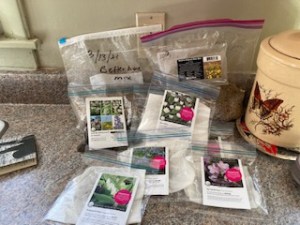 The seeds need the dark, cold and moisture to start to germinate. They’ll stay in the fridge until the last weekend in April. At that time, I’ll transfer them to a different container and hope they do germinate. The larger mixes are meant to be distributed over the prepared sites outside. I just need the weather to change to consistent warmth at 50º F with sun and rainfall to moisten the soil.
There’s a lot to do outside and it’s great to be on the tail end of winter. Let’s hope he doesn’t bring us a surprise like last year. We had a bully snow storm in early May which wrecked the release of mason bees purchased from Crown Bees. I am reluctant to order again as once bitten, twice shy. I know native bees are in the yard, but it’s fun to bring them in and create habitat for these hard-working garden pollinators.
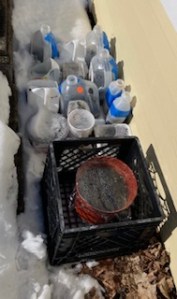 The winter sowing continues with a few additions. Yesterday, the peas were placed in the red container. Plant by the Signs poster suggested the 18th and 19th were good days for peas to be planted. It’s at least two months away from planting in the soil. So, if the cold alerts the seed to start the germination cycle. So, if the moisture and warmth from the sun induce the seed to sprout, I’ll have learned something new. The other containers have liatris, swamp milkweed, thyme, columbine and rudbeckia. They sleep under the snow and ice.
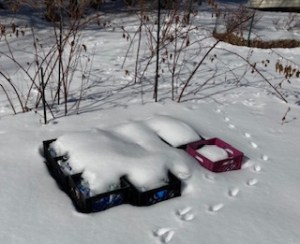 This group were put out so long ago now. Buried under the elements. Frozen in their containers. A month, it’s about a month until spring. The song birds did seem to change their tune lately. The watch is on for the red-winged black bird. When they shriek from the river, it will be a good day. Safe flights birds!
 LuceStellare