 A few years ago, I bought a little house in the country. The first time I set foot on the property as a potential buyer, I did not go in the house, but into the garden. Above all else, a larger goal in life has been to have a garden to tend with a bit of wildness around.
I had to name this space, this place of seasons, sun and serenity. I toyed with Artemis Hollow for a while and thought to bring in statuary in honor of this goddess. She still may come. But, above all else, I wanted a place where it was safe and quiet. So it is, along the riverside, protected by an alee of maples and made splendid by the long off trill of the wood thrush on warm evenings. So, it is Tranquility Vale.
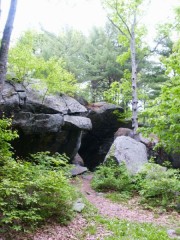 This place in Massachusetts is dominated by the Quaboag River and the township was settled as the Quaboag Plantation. The Native Americans long where here and had a winter camp at the Rock House Reservation. There are tall rock outcroppings, shallow caves, that create a natural shelter for animals and humans. They are unique and seem created as a respite against the elements. This place has been preserved and is enjoyed daily by hikers and those looking for a tangible connection to the past. The roof of the rock faces are black from centuries of camp fires.
The Native people made a great push off against the Europeans who settled the township. From the West Brookfield Historical Commission, “King Phillips War. Between August 1 and November 10, 1675, Indians did not leave a single one of Massachusetts’s eight towns on the Connecticut River unscathed. Five of the eight towns sustained major attacks and three of them, Brookfield, Northfield, and Deerfield were burned, destroyed, and abandoned. Brookfield suffered the first rout. The siege lasted three days. These attacks severed an important communication link between eastern Massachusetts and the Connecticut River. The settlers of Brookfield took refuge in the Fortified House August 2-4 until reinforcements from Marlborough arrived. After the siege ended, the settlers departed with the troops and Brookfield was not resettled by the English for more than a decade.”
My house: my little Atlas. I gave it the name after the winter of 2011 when the snow never stopped and the January thaw never came and an igloo was forming around us. When the snow and ice where shoveled off the roof that February, the banks were so enormous and the weight so crushing, that my respect for its old bones gave to the name Little Atlas. The house has male energy and the garden female. It’s a happy union most of the time.
Reclaiming a Weedy Walk
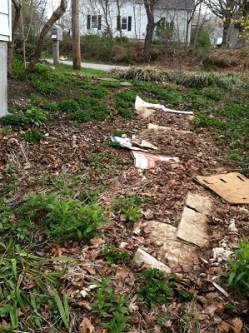 This article is meant to be about reclaiming garden space from under the weeds. The side yard which faces east/south east was dominated by the overhanging branches from the neighbor’s maple tree. In the fall of 2012, I had an arborist come in and clear out the branches leaning over on the house and casting too much shade on this side yard. The borders are a natural forsythia fence which after three years of pruning, have decided to grow up rather than out into the space.
One of the previous owners was a gardener and left behind liriope, frothergilla, hosta, vinca and a large grandiflora hydrangea in this area. The liriope is one tough perennial which I highly recommend as a plant that can take road traffic and adapts to most light conditions. The flower comes in late August into October if the fall is mild.
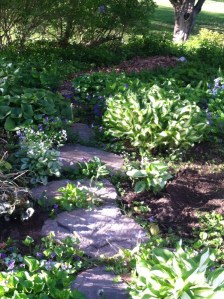 The space was reclaimed as a walk by creating a pathway from the lawn area, laying large stones dug up from around the property leading into the space. The hosta were originally planted at the lower end of the walk but were moved up to frame the walkway and give it direction. The ginger was planted two years ago and is beginning to spread. There was once a larger amount of lily of the valley but the native violets have vigorously claimed space under the hydrangea.
The material used to frame the path and stop the weeds from taking over was cardboard boxes. I laid the path over the area during the winter.
I raked and cleared away this debris and readied the path again in April. I layered the boxes, raked in new leaves. Of all things, I promised not to use chemicals or plastics in my garden. This is how it looks now. I have to lay something between the stones and the path to stop unwanted plants growing. It’s starting to look quite smashing now as the perennials are growing fast with the warmth and sun of May. From an awful eyesore to a tender garden path. Easily done with simple materials normally thrown away. A no cost way to reclaim space.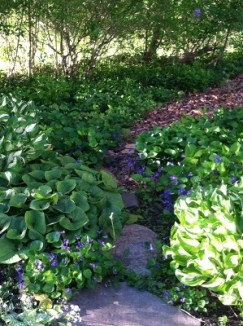
 “I rejoice that there are owls. Let them do the idiotic and maniacal hooting for men. It is a sound admirably suited to swamps and twilight woods which no day illustrates, suggesting a vast and undeveloped nature which men have not recognized. They represent the stark twilight and unsatisfied thoughts which all have. All day the sun has shown on the surface of some savage swamp, where the double spruce stands hung with usnea lichens, and small hawks circulate above, and the chickadee lisps amid the evergreens, and the partridge and rabbit skulk beneath; and now a more dismal and fitting day dawns, and a different race of creatures awakes to express the meaning of Nature there.”
 We are well past the full June Strawberry Moon and here in Massachusetts, it’s the end of the season for these bright, scrumptious berries. The spring season came on slowly as we crawled out from under a long, deep cold winter. Some fruit and berry trees that blossomed too soon, were nipped by the cold nights in April. Fortunately, the strawberries came through just fine. They had spent a cozy winter under a pile of evergreen branches saved from my neighbors pruning of cedar, fir and soft white pine trees in the yard. This strawberry patch is four years old now and for the last three years produced a good crop of berries. However, the runners have spread way out of the original boundary and the plants have aged. If I want another fine year of fresh strawberries, these are the garden days for restoration and recovery.
 of July holiday. The spring rains had been fairly steady and the soil stayed moist and healthy without the need of extra watering. The only damage the patch experienced was from the pesky wood chuck who from time to time, enjoys burrowing around the patch. He doesn’t dig down, just roams through while making a selection for dessert. The patch had a flattened appearance, but insect damage has been minimal. I do not use pesticide or chemical fertilizers on the plants. I lost very few fruits to birds or insects.
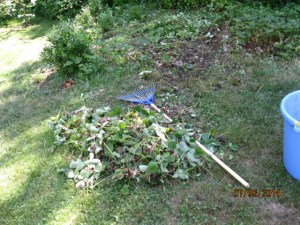 This will seem horrid but the object is to cut the growth down to the nub and let the remaining stock send out new shoots. Or, put in new plantings of a variety acclimated to the area. New plantings are best purchased at the local nursery. At this time of year, there may be bargains available as nurseries will want to move out spring stocks. The best tasting berries, tend to be the smallest so that’s what I’ll be looking for to fill in gaps in the strawberry patch.
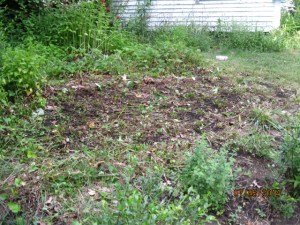 it on this year’s compost pile for next year’s new soil. Hopefully, you have a compost heap already with new soil to apply. If not, purchase a bag of well-rotted compost from the local nursery. Mix a 9 gallon pail full of compost with one shovel full of peat moss. Add in one cup of Garden-Tone Plant Food. Blend this mix together in the wheelbarrow. Pour this soil mixture over the plants and rake it smooth. Repeat this process until the entire strawberry patch has a new layer of soil spread evenly over existing plants. The nubs of the cut back plants should be visible, slightly above the new soil line. If there is rain in the forecast, let Mother Nature soak in the soil mixture. If not, water in until it is wet. The watering in should not leave it sopping or running with water. Plant in new berries in the bare spots. Cover the entire patch with a mulch of shredded straw. This is a new product I found locally. While baled straw is available, it can be hard to handle and takes some wrestling to lie in properly. The shredded straw came in a large, light bag and took all of ten minutes to spread. What a helpful product.
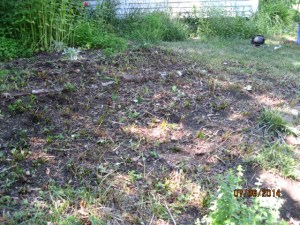 Let It Be
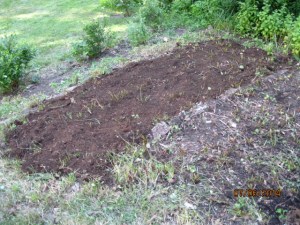 As it is important to move the patch every few years, now may be the time to find the new location and transplant the rooted berries that have escaped. Select a sunny location with at least six (6) hours of direct sun. A sheltered area facing south, southeast is ideal. As strawberries may be considered a tender perennial, protection from harsh winter winds will prevent an unpleasant surprise in March when the strawberries do not wake up.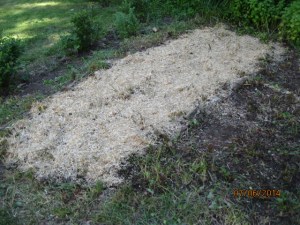
 LuceStellare