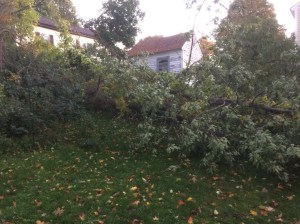
 Mid-October in central Massachusetts and the days are fairly mild. A few light frosts have occurred by now, but most important, steady all day or night rains have returned! A bizarre weather front moved through the area on October 8 knocking down a cherry tree in the yard. The storm lasted maybe fifteen minutes with gusts of wind at 50+ mph and almost horizontal large hail. A glance out the window around 5:30 p.m. and I saw the tree on the ground. The peach tree survived with only a few nicks caused by the falling tree. I thought the low bush blueberries were smashed, but, once cleared, are doing just fine. UGH! A day later and a few hundred dollars provided a cleanup of everything except the big root. Looks like the cherry is shallow-rooted and after three months of drought, was vulnerable to the storm.
Sunday was bright and sunny giving time to planting native seeds which will hopefully bloom next spring. This bed used to have Cranesbill as the dominant planting. It has been moved to another section of the garden to make way for a pollinator-friendly bed. The soil was churned up, all unwanted plantings removed and clean compost amended the garden plot.
Seeds planted here include:
 Cohosh (homegrown seeds)
Purple Coneflower (homegrown seeds)
Queen Ann’s Lace (homegrown seeds)
Wood Betony
Comfrey
Borage
Eastern Shooting Star
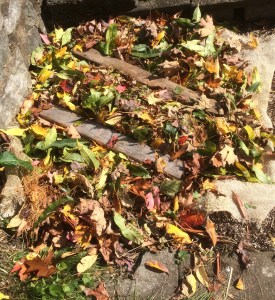
I am pleased to say some of the seeds planted were cultivated right in my yard. The garden bed gets good sun most of the year with partial shade by late afternoon. I lightly covered the seeds with soil, put over a light layer of chopped straw. On top of that is a piece of burlap and finally leaves. Why? Cats. My cats think everything belongs to them and without some protection, they will use the bed as a litter box.
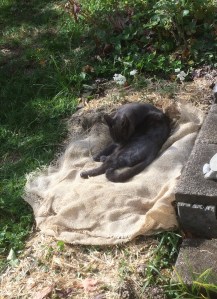 Here is Stella lounging over the spot where I planted some spring crocus and tulip bulbs.
This second bed was prepared as the other and includes:
Bunchberry
Smalls Beardstongue
Wild Strawberry
Sweet Woodruff
I found some common yarrow growing locally out in a big field nearby and have harvested clusters for planting here. The same field also provided wild strawberry which did fairly well as they were transplanted in June.
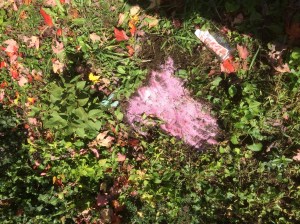 The last seed planting Sunday was butterfly milkweed. They prefer dry soil with full sun so they are given the preferred conditions. The colored sand marks their location.
Links
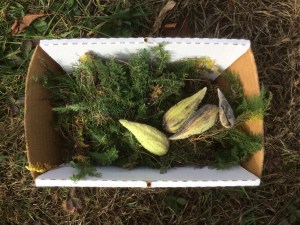 Given such a bounty, it may be best to consult the experts at
 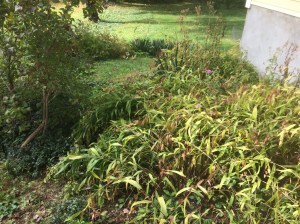 Here’s the area to be cleared. It’s filled with sea oats, phlox, and a yucca. Every year, I knock down the tall plants and pile them on the compost heap. The sea oats are an unusual plant, but only ornamental. Insects and birds leave them alone. The phlox does get pollinators on it. But, there’s a larger patch nearby so the loss is not permanent. The yucca is a pest that only spreads itself around taking up a lot of space. It’s another ornamental that looks out of place in the landscape.
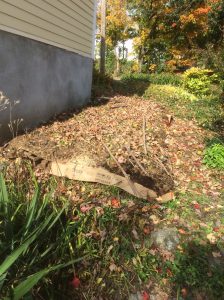
 The cardboard will hopefully provide a compostable barrier between the soil as it is and how it will be. The soil layers will consist of peat moss, chopped straw, composted cow manure, and some raised bed soil mix. On top of these are a thick layer of horse manure, and leaves. The plan is to let the winter season start the decay process of building a new area for planting. No seeds will be planted at this time. The entire patch needs to blend and start to compost. The horse manure needs at least a month to decay so I’ll let old man winter do the work.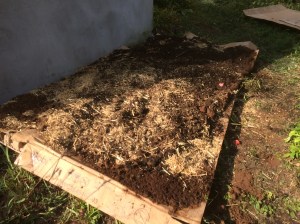
 LuceStellare