
Sunday was the day of the grand event. The weather reports warned of possible showers. I thought it never rained in Sicily from April to October. Every day has been bright and warm. I went out early to the street where I thought the floral display would be, but only found chalk outlines on the pavement. I wandered along not sure where the main event was happening. All the streets looked the same, and no signage told visitors where to go. There was a program guide but I couldn’t translate the words. By sheer accident, I came to the entrance of the Palazzo Nicolaci di Villadorata (Golden House) at Noto. This was the villa of Baron Giacomo Nicolaci, a nobleman who lived in the 1700s. I had a storybook idea of what a palace was supposed to look like and was surprised to find it in the middle of town abutted by other buildings. Palaces were supposed to be up on a hill surrounded by a green lawn with spires on the top. This one did not even have a sidewalk but was built flush to the street. It did have a grand carriage entrance and stable. The double doors had a gorgeous honeysuckle vine grown around the frame; that was in full bloom and buzzed with bees.
I bought a general admission ticket and went in for a look around. The Baron had this palace built in 1737. He was an educated man and traveled around Europe on the grand tour. His family invested in the tuna industry and prospered enough to buy land in Val di Noto. Niccolaci was a scholar, philosopher, astronomer, and alchemist. He spoke nine languages including Greek and Latin. He never married and suffered from a deformity causing a curve of the spine hence the nickname “Hunchback Jack”. He died at 49 years old.
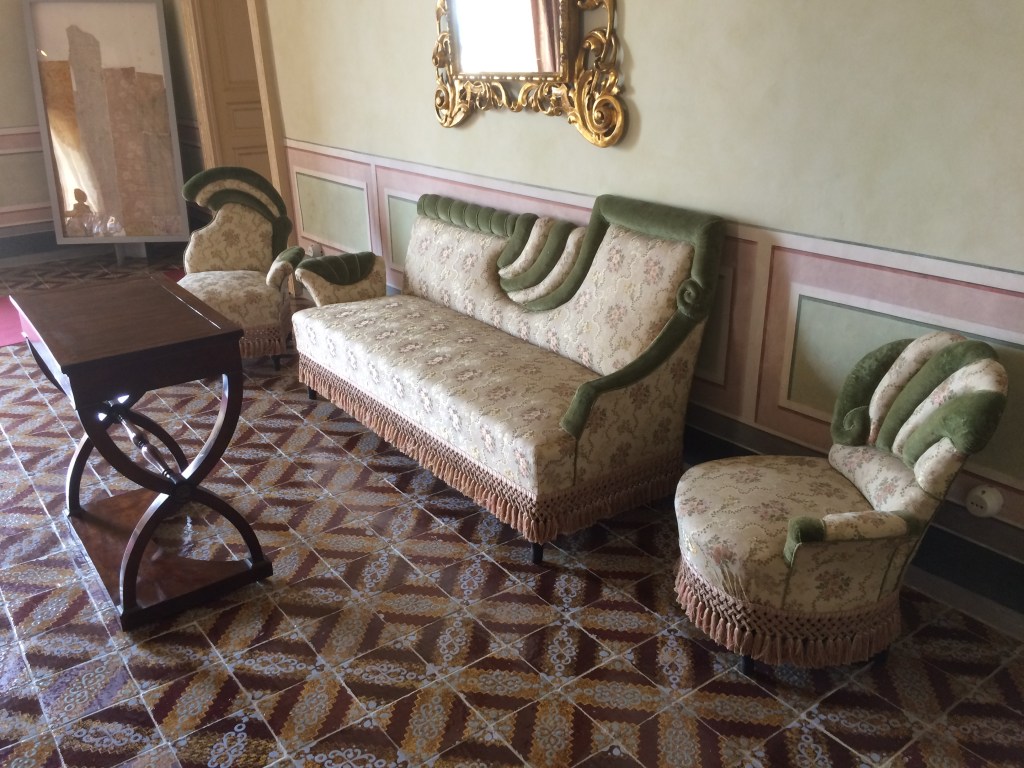
The house had 48 rooms in all. In Italy, the first floor is the cantina, a place for storage and servants. The living quarters are all on what Americans would call the second floor. The stone staircase was wide and welcoming. The rooms were arranged with period furniture and included a music room, theater/dancing hall, ladies saloon, dining room, billiards room, and an office for the Baron. The music room had two pianos, a harp and an ancient upright with keyboard colors in reverse, 44 solid black keys and 22 white keys where the flat is now. I thought it might be a small harpsichord as it had strings inside. The instruments looked old and may have been original to the late baroque period of 1737 – 65.
The walls and ceiling were painted in bright sun colors, floral motifs, stripes, and landscapes. The furniture in the small parlor off the theater caught my attention.. A day chair had a backrest in the shape of a fan. The contrasting colors were in shades of light siena with tasseling at the base, a sea sand blended brocade upholstery and forest green tufted scrollwork along the top edges. The single chairs had a left but no right arm rest. The design is striking and unusual. The most enchanting room of all was the theater/dancing hall. The ceiling and walls were painted with scenes from Greek mythology. This room was for celebrations, fun and freedom; bright and inviting.
Stone buildings have a special look and feel inside and out. The walls, floors, ceilings, and staircases seem to be perfectly straight. The most abundant resource for building was stone cut from abandoned ruins. In this case, from the ruined original city of Noto wrecked in 1693 by an earthquake. The city planners moved it all a short distance away and rebuilt it in the Spanish Baroque style. At the time in Sicilia’s history, it would have been under the dominion of Spain, especially for Noto, the region of Catalonia. A great deal of thought and effort went into this building.
By complete accident, I found the floral display! I went out on the balcony of Baron Nicolaci’s office and there it was below. The entire Via (Avenue) Nicolaci was the site of the L’infiorata. I counted seventeen floral vignettes laid out on the pavement. I could not get outside fast enough to find my way to the end of the line to wait my turn to walk by. Now I understood why rain would have been so unwelcome. The day was a mix of sun and clouds. The planning for each year’s festival never abates and to lose the day to rain would have been a terrible let down to everyone in attendance. The line moved very slowly to take in the brilliance of the artistry.

The displays started with a coat of arms for Noto. A large grey bird of prey with wings out floating on a background of yellow. He had a crown on his head and a shield on his breast. The shield bore a white cross on a red background. The next image was St George killing the dragon. This myth had come down from England to Sicily. I had been in Ragusa and Modica a few days before where this image was seen repeatedly. This story was most important; told again and again in stone, marble and oil paintings. It was prominent in many churches and monuments around the cities. St. George slaying the dragon was a mythological representation of the new religion killing the old. The dragon was a serpent and devil in another form. The native beliefs may have been taken as evil and had to be literally and violently destroyed. The floral displays included a portrait of Salvador Dali, a Knight on horseback, the flamenco dancer Trina di Lorenzo, a donkey from Catalunya, bouquets of flowers, dancers, and more. Every scene was glorious and lovingly laid out.
The avenue led up to the Chiesa di Montevergine where I stopped in to enjoy a performance of Vivaldi’s violin concerto the Four Seasons. The acoustics in the knave were perfect. The performers came from Catania and dressed in period costumes. It was here I met Americans in the crowd. I heard English spoken and asked where they were from. It turned out, the man went to Holy Cross College in Worcester, MA and knew the area where I was from.
I wandered out of the church and into the city enjoying the festival atmosphere. A group of bicyclists appeared. All male, each perfectly decked out in race garments. The helmet, socks, shoes and attire were so vibrant. The bikes looked like fancy racing models. They were part of a local bike club out of Catania in Noto to enjoy the day. It struck me how they presented themselves. They looked exactly like slick, cool cyclists in a magazine. Aha! Even the men love to be fashionably dressed.
Today was comparable to founder’s day back home. Important buildings and sites opened to the public. Hundreds of people wandered in and out. Larger Sicilian cities have a mother church and smaller churches around town in neighborhoods. Noto had as many as 50 Catholic churches, convents or buildings. The main symbol in several of the churches was the all seeing eye. It was in a prominent position somewhere in each sacristy. My guess was this symbol is what united the churches and sent a repeated message to the faithful. It can be taken two ways; either that you were never out of the sight of God or; you are always under the eye. I was raised in the Catholic church and while. I may have admired the artistry and beauty, I was not among the faithful.
It was on a visit to the Acoma Pueblo near Albuquerque, New Mexico in 2004 that I had an awakening. The Spanish Catholics built the San Esteban del Rey Mission on top of the native people’s most sacred kiva. The tour guide said the builders made the local women carry sacks of soil from the canyon floor to the top of the mesa. It took years to build the structure. The natives said a few of them ended up buried in the church walls as well. Once I understood what had happened, not a shred of connection to the original faith given at birth could remain.
In Noto, each public building had a display of clothing, gloves, hats and other regalia worn by a noble person of the day, like a tableau from Baroque times. Clearly, this period in history stood out for them. The city gates were draped with the flags of Catalunya and Italy.
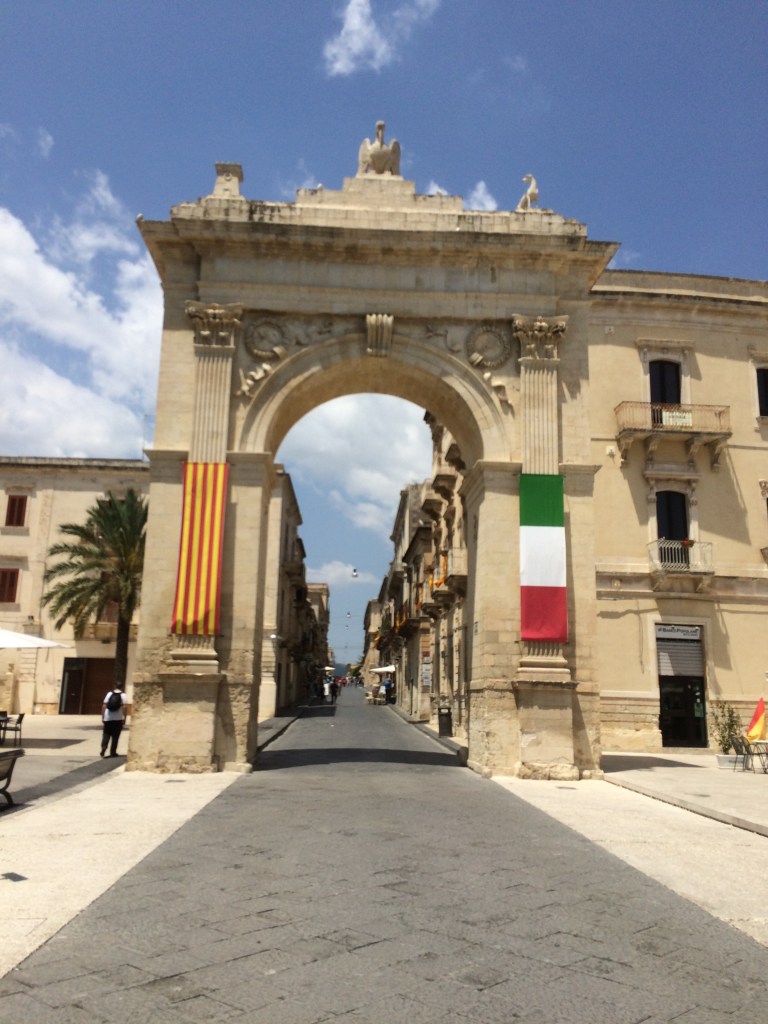
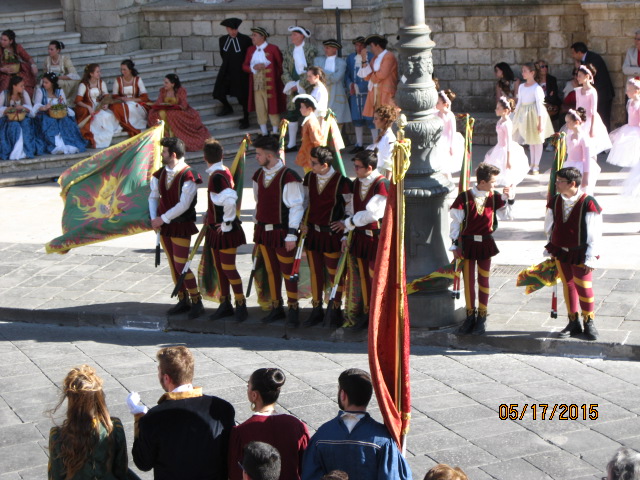
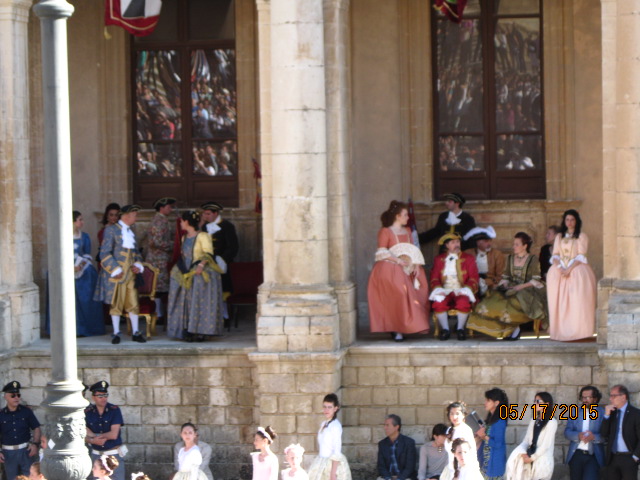
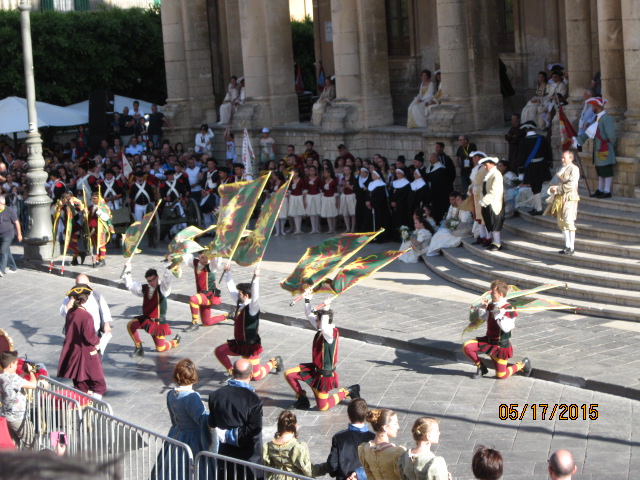
A grand pageant wound through the streets later in the afternoon. Men, women and children dressed in period costumes represented the Palace of Nicolaci and all the people of prominence in Noto. The parade ended at the Palazzo Municipio (Town Hall) where a presentation of baroque dance and music took place. There was a drum corps, ballet troupe, Sicilians danced the tarantella, a flag juggler, Jesuits, and noblemen of every rank. The baron himself oversaw the entire performance. He arrived in a horse drawn carriage. I had no idea this was part of the day’s festivities. It compared to nothing I’d ever seen anywhere. The people of Noto are proud of their heritage and invite everyone to celebrate the return of spring in this great festival of May. This was after all, La Primavera Barocca or the Baroque Spring Festival.
 LuceStellare