Winters in southern New England can be quite cold and snowy from Thanksgiving until late April. The jet stream sometimes brings on a milder weather pattern, but also can provide fierce, deep cold with abundant snowfall. A freeze, mild thaw cycle will be normal as we slowly creep towards spring renewal.
Outdoor gardening during these months is normally confined to pruning. Sometime in February, plans for the spring garden will start to take shape. A few sketches of different garden areas will emerge with notions to put in new plantings. A fierce October storm blew down a black cherry tree in the backyard. All that remains is the stump so that is on the list of things to do next year.
Next year’s major goals center on creating a more pollinator friendly environment. About eleven years ago when I bought the property, the lawn was weaned off a fertilization program. It took a while, but now I have healthy, fat earthworms emerge wherever the earth is turned over. So many birds live here bringing the great pleasure of being able to hear their songs.
The plantings will include native shrubs, flowers and trees if I can find them. Nurseries sell what is easy, not always what is best for conservation. In the fall, I prepared two large beds for seeding and planting pollinator friendly perennials and annuals. It took a lot of hard work to clear out the none native weeds, lay down the compost, letting it decay and settle during the long winter months.
One mission this winter is to purchase a seed mix for the beds. The goal is to order the right blend for my area and store it in a cold space to at least get some of the freeze/thaw conditions they need to germinate. However, the notion of winter sowing has been discovered in the last few months and I am fully into the experimental phase of this different way to plant native perennials.
 It’s actually appealing in that material that is normally put in the waste stream is salvaged to create miniature greenhouses that allow the seed to experience freeze/thaw, but provide for germination in a controlled environment. So much of seeding and germinating is happenstance. When the conditions are right, the seeds will sprout. This winter sowing helps to provide this condition.
So, here is the pile of materials that will assist in seeding. The milk crates will hold four plastic one-gallon jugs containing soil and seed. The seeds came from different sources. Some from a local seed exchange. The common milkweed was field harvested in October. There is also aster and black-eyed Susan ready to sow.
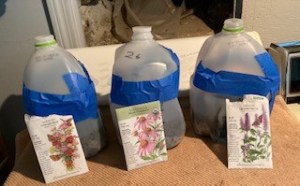 Apparently, there are also optimum days to seed and a reference to this helped establish those days. December 20 was mentioned to be one best day to plant among many so called ember days.
It took about two hours to produce this lot. Here they sit out in the snow. Another batch will be prepared and then it’s time. The snow/rain cycle has been active for weeks so additional moisture in the jug won’t be necessary for a while. The caps are off the jugs allowing the elements inside. There are drainage holes in each jug.
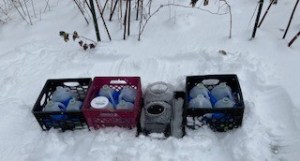
It felt odd to be handling soil and seeds at this time of year but in a few months, we’ll see what happens.
Perennial List:
Common, swamp and swan milkweed, clematis, white turtlehead, coneflower, lavender hyssop, cardinal flower, lupine, columbine, wild bergamot, ironweed, and yarrow.
 LuceStellare
I have my jugs collected, and the seeds have arrived, so I’ll be doing my winter seeding here as well: larkspur, cornflowers, shasta daisies, echinacea, primulas, Lady’s Mantle for sure, others possibly. Nice post.
LikeLiked by 1 person