October in central Massachusetts can be a weather roller coaster. The morning mist from the Quaboag River will hang over the yard until lunchtime. The sun warms up the south side, bringing much appreciated solar drying power to the laundry. How quickly the sunlight falls late afternoon. By dinnertime, it’s quiet of birdsong. Even the crickets are already in bed! Despite the thermometer’s theatrics, the urge to garden has come on with intensity. So now, the goal is to establish a pollinator garden bed for planting in springtime. The elements will be our friend and create the space for insects to find the foods they need to thrive and grow.
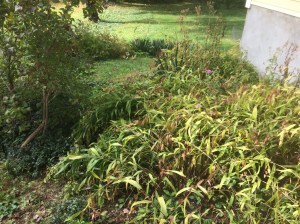 Here’s the area to be cleared. It’s filled with sea oats, phlox, and a yucca. Every year, I knock down the tall plants and pile them on the compost heap. The sea oats are an unusual plant, but only ornamental. Insects and birds leave them alone. The phlox does get pollinators on it. But, there’s a larger patch nearby so the loss is not permanent. The yucca is a pest that only spreads itself around taking up a lot of space. It’s another ornamental that looks out of place in the landscape.
The first task is to clear out the plants, chopping them down close to the ground. I used the cut-down vegetation as a base for under the cardboard that will be the overlay for creating a new layer of soil. The goal is to smother what is under it and build an area for seed planting in the spring.
 The cardboard will hopefully provide a compostable barrier between the soil as it is and how it will be. The soil layers will consist of peat moss, chopped straw, composted cow manure, and some raised bed soil mix. On top of these are a thick layer of horse manure, and leaves. The plan is to let the winter season start the decay process of building a new area for planting. No seeds will be planted at this time. The entire patch needs to blend and start to compost. The horse manure needs at least a month to decay so I’ll let old man winter do the work.
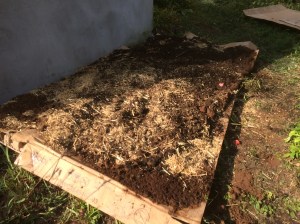
The latest reading I’ve done around creating a pollinator-friendly yard is to not rake leaves. I normally use the mower to shred the leaves and let them stay in the soil overwinter as a poor man’s mulch. Hmm, this will be a switch of habit to not mow, but rake and store. That will be a challenge as the wind loves to blow the leaves everywhere. I may layover burlap to keep the bed contained. This barrier may also dissuade my cats from visiting the area. Those pesky felines already visited the new soil and probably used it as a kitty litter box, How to keep them out is a wonder.
The cost went into some of the soil building. The cardboard and horse manure are free. It took only a few hours to set up this space as it is. The real fun will be in figuring out which seed blend to order. Some seeds need that wintertime to sprout in springtime. If so, I’ll put them in a bad and leave out in the sun porch to experience freezing and thawing. The goal is to seed when the sap moves in March 2021.
 LuceStellare